"Welcome to Dorshei Derekh, where spirit, singing, intellect, and community join in a single wonderful minyan." Our minyan has been going strong for nearly 40 years. Join us at 10:00 AM on Shabbat and Chag in the Maslow Auditorium or via GJC LiveStream - https://venue.streamspot.com/b455ca4d - For Livestream PW: email mark@markpinsky.com, and to join our listserv, email nnevins@gmail.com.
Tuesday, March 18, 2014
Fairtrade Kosher for Passover CHOCOLATE!
This past Shabbat at Dorshei Derekh, Michael Masch mused how appropriate and well-themed slavery-free chocolate would be for Passover enjoyment.
It seems the GJC Religious School is a step ahead of that wish, parterning with Fairtrade Judaica and T'ruah, to sell just that.
If you're out of the area, perhaps there is a way to order - check with Rabbi Alanna Sklover.
What a way to put your money where your mouth is!
Tuesday, February 11, 2014
Personal Journeys in Spiritual Community - Saturday February 22
Please join us on Saturday
February 22 at our regular services followed by an extended Kiddush and a panel discussion on
Personal Journeys in
Spiritual Community
1:00 - Panelists: Mitch Marcus, Dina Pinsky, and Wil Gafney
This is an opportunity to get to know one another better. We share a cherished spiritual community, Minyan Dorshei Derekh and the Germantown Jewish Centre.
What are our backstories?
Labels:
members of DD,
Shabbat activities,
Wil Gafney
Sunday, January 5, 2014
David Mosenkis Davar Torah: Parashat Bo - Hearing and Responding to the Cry of the Oppressed
January 4, 2014
In this week's parashah we
read about the 3 final plagues that finally convince Pharoah to let the
Israelites leave. We get instructions for how to commemorate Passover, both the
first Passover in Egpyt that very night, and the Passover to be celebrated by
Jews throughout the generations. And the Israelites, along with a mixed
multitude, leave Egypt.
I want to focus on a
compelling question of justice raised by today's parashah, and its lessons for
us today. Why are all Egyptians subject to the plagues, when it is Pharoah's
stubbornness that spurs God to bring on the plagues? This sounds like
collective punishment, punishing a whole group of people for the behavior of
some in the group.
In the case of the last plague we are told very explicitly
that God struck down all first born in Egypt "from the first born of
Pharaoh who sat on the throne to the first-born of the captive who was in the
dungeon" (12:29). Italian sage Sforno says that this verse means from the
most guilty to the least guilty, seemingly accepting this as collective punishment.
But other commentators avoid this collective punishment interpretation. Rashi
claims that the plague of the first-born was a punishment for each Egyptian who
particpated in the oppression of the Israelites, saying even Egyptian slaves
"enslaved the Israelites and took joy in their suffering."
Another explanation
attributes the collective punishment to collective responsibility. As the
commentary in our Etz Hayyim says:
"Non-Israelite slaves were punished because they did not make common cause with the Israelites, saying 'let us join hands and rise together against our oppressors.' Bad as their lives were, they took perverse satisfaction in knowing that there were others even worse off."
Even if Egyptian slaves were unable to stop the oppression of the Israelites,
their silence was damning. Some commentators speculate that some Egyptians did
make common cause with the Israelites in taking a stand for freedom over
oppression. These Egyptians threw their lot in with the Israelites by putting
blood on their doors, thus saving their first-borns, and they comprised the
mixed multitude who joined the Israelites in leaving Egypt.
So one way we might read the
collective punishment in this parashah is to teach us about our collective
responsibility to free the oppressed. The text teaches us that our
responsibility extends beyond our ethnic group, and extends to all levels of
power and privilege. Even Egyptians at the lowest echelons of society were
viewed as responsible for the wrongs perpetrated by Pharoah, and responsible
for the well-being of the minority living in their society, the Israelites.
At least 4 places in Torah,
God commands you to love and not to oppress the stranger, for you were
strangers in the land of Egypt. Why is our experience as strangers in Egpyt used
to explain or support our obligation to treat the stranger well? Is it that our
experience of oppression in Egypt enables us to have empathy and compassion for
the experience of the stranger? That's the way I've always looked at it, and I
think this is indeed a motivating perspective.
But I recently learned another,
perhaps even more compelling perspective, from the book Justice in the City by
Aryeh Cohen, a Rabbinics professor formerly at RRC and now at American Jewish
University. Cohen claims that the real lesson of oppression in Egypt is not
compassion, but rather an obligation to imitate God rather than imitating
Pharaoh. This means engaging actively to fight against oppression, rather than
ignoring and distancing ourselves from it.
How does God respond to
oppression? God heard the cry of the people, took notice of them, and did
something about it (Ex 2:24-25, 3:7-8). How did Pharoah respond when the people
cried out to him? He turned a deaf ear and made their work harder (Ex 5:15-18).
In a few weeks, in chapter
20 of Shemot, we'll read:
"You shall not wrong a
stranger or oppress him, for you were strangers in the land of Egypt. You shall
not ill-treat any widow or orphan. If you do mistreat them, I will heed their
outcry as soon as they cry out to Me, and My anger shall blaze forth and I will
put you to the sword, and your own wives shall become widows and your children
orphans."
In this passage, how are we
to be movivated by "you were strangers in the land of Egypt"?
Following the Torah commentary of 13th century Nachmanides (Ramban), Cohen
points out that merely feeling compassion for the victim ignores the 2nd half
of the passage, beginning “If you do mistreat them”. Ramban points out that God
always hears the cry of the oppressed and saves them from people stronger than
them. The choice is to follow the example of God, who heard the cry of the
Israelites, leading to redemption, or the example of Pharoah, who did not hear
the cry, leading to the devastation of Egypt. Either way, the oppressed will be
redeemed. But if you leave the redemption to God, you will go the way of the
Egyptians.
This principle is taken up
by the rabbis of the Talmud and later commentators. In a discussion over
whether it's desirable to build a gatehouse for a shared courtyard, the Talmud
concludes that a gatehouse is permitted only if it's easy to enter. Rashi
comments that the problem with some gatehouses is that they can gate off poor
people who are crying out for assistance, such that their voices are not heard.
And most other commentators share this view that the potential problem with
gatehouses is that they will not allow the cry of the poor to be heard. Because
none of the commentators give a textual basis for this explanation, they must
have considered it obvious that the ability to hear the cry of the oppressed is
mandatory. Rashi uses the same word, tze'akah, for the cry of the poor, as the
Torah uses for the Israelites crying out to God and to Pharoah. The rabbis seem
to have internalized the mandate to act like God rather than Pharoah in hearing
the cry of the oppressed.
So if we start from an
obligation to hear the cry of the oppressed, what is our obligation to respond?
Does our degree of connection to the oppressed matter? What about our power to
help them?
The Talmud relates a story
known as "Rabbi Elazar's cow". After discussing various shabbat
prohibitions, the text expresses the displeasure of the sages that Rabbi Elazar
ben Azaryah's cow would go out with a strap between its horns, which violated
one of the shabbat prohibitions. The ensuing discussion reveals that in fact
Rabbi Elazar owned thousands of cows, and that this shabbat-violating cow in
fact belonged to his neighbor. So why is it referred to as "Rabbi Elazar's
cow"? Because he failed to protest with his neighbor against its violating
the law, and it is therefore as if he himself is responsible. "Rabbi
Elazar's cow" becomes shorthand for "one who had the opportunity to
protest against a wrongdoing but did not."
The Talmud then continues:
- All who can protest against something wrong that one of their family is doing and does not protest, is acccountable together with their family.
- All who can protest against something wrong that one of a citizen of their city is doing and does not protest, is acccountable together with all citizens of the city.
- All who can protest against something wrong that is being done in the whole world, is acccountable together with all the citizens of the world.
So not protesting a wrong is
practically the same as doing the action. And subsequent passages show that to
the rabbis of the Talmud, it didn't matter if you have the power to stop the
wrongdoing or if your protest would be effective - you have a responsibility to
protest even if you think your protest will not stop the transgression. The
Talmud relates a striking image of Truth having an argument with God. The
argument concerns whether observers of a certain wicked behavior in a story in
the book of Ezekiel are themselves guilty. God initially maintains that the
bystanders are righteous. Truth points out that they were able to protest and
did not. God answers "It is revealed and known to me that if they had
protested, they would not have accepted the protest". And Truth responds
"Master of the World, though it is revealed to You, is it revealed to
them?" Truth wins the argument, noting that since only God can know for
sure whether a protest would be futile, mere mortals have an absolute
obligation to protest.
The potential consequences
of not protesting wrongdoing is illustrated in the Talmudic story of Kamtza andBar Kamtza, 2 citizens with similar names. A rich man who was friends with
Kamtza but did not like Bar Kamtza threw a big party, and invited all the
important people of the town except Bar Kamtza. But his servant mistakenly
delivered Kamtza's invitation to Bar Kamtza. When Bar Kamtza showed up at the
party, the host was enraged, and demanded that Bar Kamtza leave. To avoid
public humiliation, Bar Kamtza offered to pay for his share of the food, then
for half the cost of the party, then for the entire cost of the party. But the
host was adamant and had Bar Kamtza physically removed. Bar Kamtza looked
around, saw that all the sages of the town watched and none of them came to his
support. He was so angry and humiliated, he convinced the caesar that the the
Jews were rebelling, and as a result, the caeser came and destroyed Jerusalem
and the Temple. As a result of the sages' not protesting, the Temple was
destroyed.
So to recap the main
lessons:
1. We are to hear and
respond to the cry of the oppressed and the stranger, because we were oppressed
strangers in Egypt, not only out of compassion for the oppressed, but to engage
in God-like action leading to redemption, rather than Pharoah-like action
leading to destruction.
2. We must protest when
someone we know and have influence over transgresses, as Rabbi Elazar failed to
do around his neighbor's cow.
3. We must protest the
unjust actions even of those over whom we may not have influence.
Questions:
1. Today, how might the
positive consequences of hearing and responding to the oppressed, or the
negative consequences of not hearing and responding, play out for the Jewish
community or for us as individuals?
2. What does it mean today
to have easily accessible "gatehouses" in our living places that
allow us to hear the cry of the oppressed?
3. What if protesting wrongdoing involves costs
or risks? To what extent, if any, does this affect our obligation to protest
Sunday, December 8, 2013
Israelite & Jewish Identity in Black & White: Shabbat Vayigash - Dr. Wil Gafney Davar Torah
presented by the Rev. Wil Gafney, Ph.D. - 12/7/2013, Minyan Dorshei Derekh
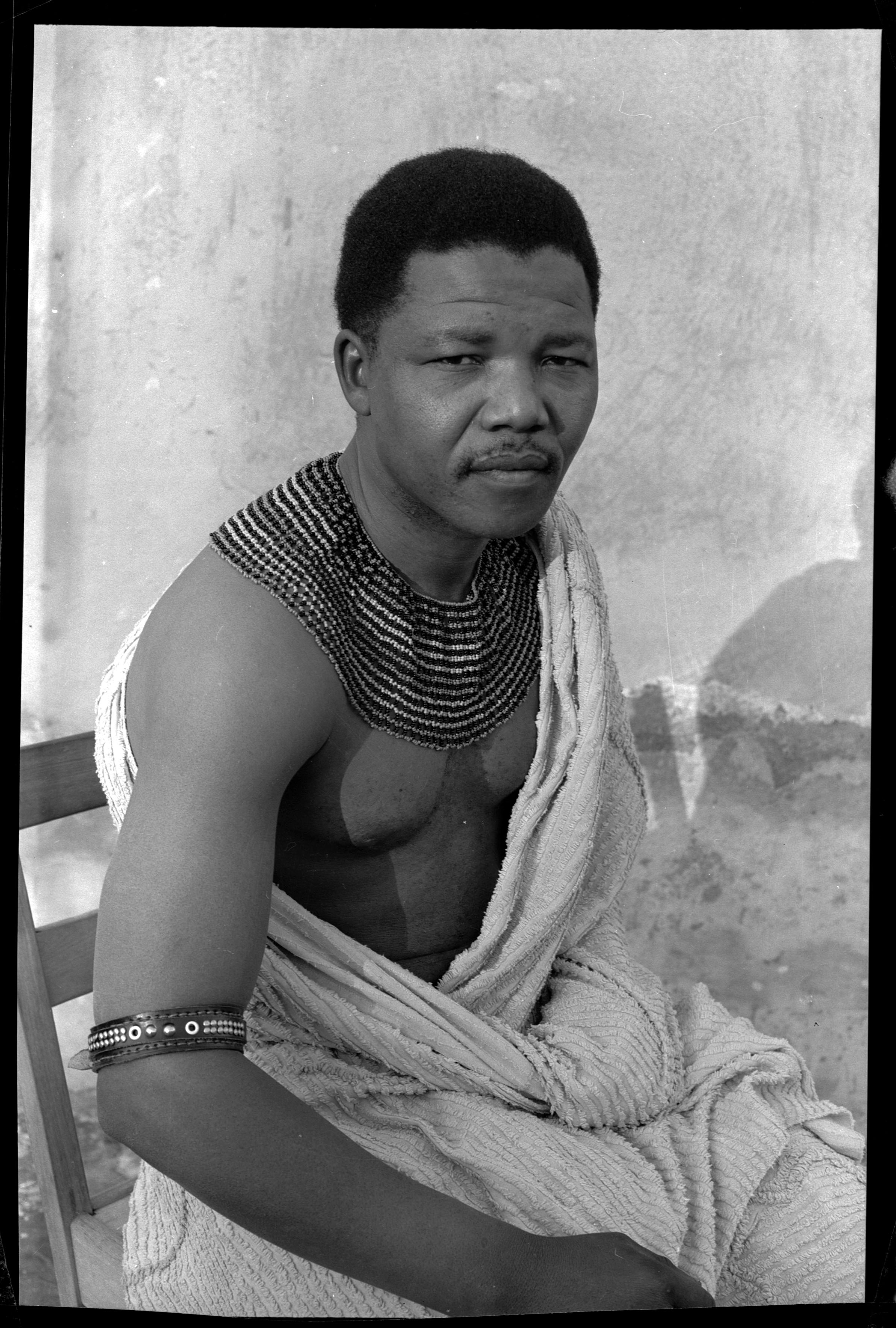
*Vayigash Mandela. Mandela stood. And now he is at rest. I dedicate this drash to the memory of Rolihlahla, Nelson, Mandela, Madiba. (Vayigash, “he stood,” is the first word of today’s Torah portion, Gen 44:18-47:27.)
Ex 46:20 To Joseph in the land of Egypt were born Manasseh and Ephraim, whom Asenath bat Potiphera, priest of On, gave birth to for him.
I was going to begin: “Jewish folk and black folk have shared experiences of diaspora, involuntary and voluntary.” But that language is not quite right. Those binary categories presume there are no black Jewish folk (or African Israelites). We know that’s not true, and no, I’m not about to convert. But what language should I use instead?
Slavery. Freedom. Diaspora. Migration. These are some of the themes that drew enslaved Africans in the Americans to the stories of the Israelites in spite of the best efforts of the slavers – black folk are the only folk in the United States for whom reading was illegal, primarily to keep my ancestors from reading the bible and concluding it called for their liberation. Though to be clear Africans were not dependent on slavery, white folk or Western Christians for their introduction to either testament, Judaism or Christianity.
Africa looms large in many of our hearts this week as one of her lions has taken his final rest.

South Africa is one of the spaces in which Jewish and African identities meet and mingle, in the very kohenic DNA of the Lemba people. (The Lemba are South African and Zimbabwean African Jews with genetic links to the Kohen, priestly gene, previously identified in Jewish populations.)
Joseph’s Egyptian sojourn complicates the issue in interesting ways. On the one hand, Joseph marries an Egyptian woman so the tribes of Ephraim and Manesseh are half-African. Westerners have worked really hard at separating Egypt from Africa although we don’t separate any other northern countries from their continents. American Biblical scholar Martin Noth writing in the 50’s and 60’s was scandalized by Egyptian art and wrote that the Egyptians were quite simply wrong to portray themselves with brown skin and wooly hair as though they were Negroes. (Clearly a Freudian reaction to issues at home.) I see similar motivations in the claims that aliens or the residents of Atlantis built the pyramids, anyone other than Africans.
Generations of folk of all races have asked what the Israelites looked like, for many, in order to identify with literal, cultural or spiritual ancestors. According to Mishnah Nega‘im 2:1: R. Ishmael stated: the children of Israel – may I be an atonement for them! – are כְּאֶשְׁכְּרַע like eshcara-wood neither black nor white but of an intermediate shade.
Well, that settles that. According to Jastrow eshcara-wood is either box-wood – which looks to me like wood-colored wood, kind of tan – or eshcara-wood is ebony, which completely changes things. I published an essay on blackness and whiteness in rabbinic literature last year and am borrowing some of that today:
It Does Matter If You’re Black or White, Too-Black or Too-White, But Mestizo is Just Right
Rabbi Shimon bar Lakhish says in Bavli Bechoroth 45b:
לבן לא ישא לבנה שמא יצא מהם בוהק
שחור לא ישא שחורה שמא מהן טפוח
Lavan lo yisa’ lavanah sh’me’ yatza’ lahem boheq
shachor lo yisa’ sh’chorah sh’me’ yatza’ lahen t’fuach
A-white-man should not marry a white-woman lest they produce boheq, a-too-white-child, and a-black-man should not marry a-black-woman lest they produce, t’fuach, a-too-black-child. It is important to remember that the rabbis are discussing their own kinfolk, black, white, red, spotted and speckled, who are also their skin-folk.
The texts are about how to tell when someone has a plague spot on their skin and how skin-color affects the inspection and determination. Given the range of skin tones evoked by the range between “excessive whiteness” and “excessive blackness” – ebony, ivory, cocoa, mocha, caramel, sandalwood, perhaps even peaches and cream, along with black coffee – no sugar, no cream, how will the nega, plague spot appear on all of these skin tones?
The terms boheq and t’fuach, “excessive whiteness” and “excessive blackness” are not always negative in the rabbinic lexicon. Boheq means “bright” and “brilliant” and “beautiful” in reference to jewels and candlelight and Sarah’s beauty and the brilliance of scholars across the tradition. (Cf: Yerushalmi Pesachim 27b, Bavli Kiddushin 33a, Gittin 11a and Sanhedrin 100a.) “Excessive blackness,” t’fuach, is related to a particular type of pitcher used for hand-washing, t’fiyach, – leading to Rashi’s interpretation “black as a pitcher;” no one seems to know what sort of black pitcher Rashi meant, but it was certainly not pejorative. There is a secondary lemma that refers to “grass” and “grain” leading Jastrow to say that t’fuach might refer to the skin discoloration of a person dying from starvation due to lack of grain. Following Rashi t’fuach was the same shade of black as a well-known household object, now obscure but with no negative associations. So then, according to Resh Lakhish, thekohanim (and likely the rest of the Israelites) range in skin-tone from blacker-than-black to whiter-than-white with only the extremes on both ends perceived as problematic.
The full Mishnah Nega‘im 2:1 text:
The bright spot in a German (girmani) appears as dull white, and the dull white one in a Kushite appears as bright white. R. Ishmael stated: the children of Israel – may I be an atonement for them! – are like eshcara-wood neither black nor white but of an intermediate shade.
Germani is used in rabbinic literature to refer to the inhabitants of the Roman province of Germania, the ancient Cimmerians (related to the Thracians), the biblical Magog and stereotypical white folk. FYI: The Cimmerians have crossed over into popular culture as the people from whom Conan the Barbarian emerged, played by the Austrian (not-quite-Germani) actor Arnold Schwartzenegger and by the half-Hawaiian – mestizo? – actor Jason Momoa.
Bringing us back to today’s parsha, Bereshit Rabbah 86:3, identifies Joseph as Germani: Everywhere a Germani sells a Nubian, while here a Nubian is selling a Germani! This refers to the sale of Yosef by an Ishmaelite, descended from Hagar the Egyptian.
Which brings me back to Joseph and Asenath and their children in our parsha. My ancestors looked to the ancient Israelites as spiritual kin and proof of a liberating God active in the world. Generations of lay and professional biblical scholars have charted out complex relationships between people of African descent and beney Yisrael, especially in the places where they overlap and intersect, like the land itself, a bridge that connects Asia and Africa. The ancient Israelites and Biblical Hebrew are characterized as Afro-Asiatic by scholars. Yet whiteness and Jewishness go together in the popular and rabbinic imagination though in neither are they completely inseparable.
Each of us is a series of interwoven and overlapping identities. We operate out of multiple identities at a time. As I offer this drash I am most aware of being a member of Dorshei Derekh, a biblical scholar and a black woman. Others may be more aware of my Christian identity than I am myself at this moment.
My questions are about identity:
Which of your multiple identities are at the forefront of your self-articulation in differing contexts and why?
Are you aware of others perceiving you through the identities that are more important to them than those that are for you?
So much of the bible and its interpretive literature is about constructing and maintaining identity, which of those constructions are still meaningful and which are being reconstructed in your life and religious practice?
Michael Jackson famously sang, “It doesn’t matter if you’re black or white.” The space between unacceptable blackness and unacceptable whiteness in Bavli Bechoroth 45b, what Soncino translates as “excessive blackness” and “excessive whiteness” is to borrow a term from the Latina and Latino interpretive lexicon, a mestizo space. Implicit in the prohibition, A-white-man should not marry a white-woman lest they produce boheq, a-too-white-child, and a-black-man should not marry a-black-woman lest they produce, t’fuach, a-too-black-child, is the solution, that black and white people should marry each other and produce beautiful mestizo babies. Shabbat Shalom.
Wednesday, December 4, 2013
Barbara Breitman - Parashat Vayeshev and Climate Change
Bobbi
Breitman, Minyan Dorshei Derekh November
23, 2013
Today’s parasha begins:
“Now Jacob settled in the land where his father had sojourned…” Gen 37:1.
Va yeshev Yaackov b’eretz m’gori aviv…
You might be surprised that with this narratively rich parasha, I am
going to focus here….but I am.
From Aviva
Zornberg, I learned that this short phrase was the focus of microscopic
attention by the earliest midrashic commentators who offered some rather
troubling interpretations of this seemingly innocuous verse. Rashi, for
example, comments: “Jacob wished to live
at ease, but there leapt upon him the troubles of Joseph”. It seems likely that Rashi noticed that
Chapter 37, which begins with Va’yeshev,
ends with Joseph being sold into slavery as Jacob mourns for the beloved son he
believed had been ripped apart by a wild beast.
After his tumultuous life, Jacob sought, finally, to live in peace, but
this desire of his old age was, at least emotionally, savaged.
Zornberg
guides us to what she believes is the source midrash for Rashi’s commentary on
this verse: Quoting Bereshit Rabba:
“When the righteous settle in peace….. (that is) seek to settle in peace in this world, Satan comes to accuse them.” What a strange aphorism to the contemporary
ear! Isn’t peace a high value toward
which the righteous should aspire?
Apparently not. The rabbis seem
to be asserting that the righteous make themselves vulnerable to Satan’s attack
by their over-weaning desire to live at ease, to settle in peace, in
this world. Peace is for the
world to come. It is a grievous error,
according to Chazal, to desire to see history resolved, sojourning over, in
one’s lifetime, and in this world.
Zornberg
comments further: When Jacob tries to
‘settle in peace’, he looses vengeful furies not because his is a moral
offense, but because it constitutes a wrong understanding of the human
condition. The wicked may seek to gain
quick release from angst; but the righteous are asked to suffer it, not to turn
away from it. “To seek peace prematurely
is to beg off from reality.” To face it,
and to act wisely, is the responsibility of the righteous.
This
morning, standing on the scaffolding provided by Zornberg, I want to emphasize
the second part of this short verse “to settle in the land where his father sojourned, and hear how the Torah might be
addressing us today. Standing of the
shoulders of my ancestors, I interpret the verse: When we seek to settle with ease in our
current world, as if we are living in the same world where our parents lived,
we loose vengeful furies on generations to come. It is a wrong understanding of our current
condition to think we are living on the same earth on which our parents
sojourned.
Bill McKibben, the head of 350.org,
has been warning for years: “Global
warming is no longer a philosophical threat, no longer a future threat, no
longer a threat at all. It is our
reality. We’ve changed the planet,
changed it in large and fundamental ways…The world as we know it has
ended. We imagine we still live back on
that old planet, that the disturbances we see around us are the old random and
freakish kind. But they’re not. Earth is a different place. A different planet.” (from Eaarth: Making a Life on a Tough New Planet) While humans have been the cause for the
sudden surge in greenhouse gases and hence the rise in global temperatures, the
heat we’ve caused now triggers ominous, systemic feedback effects so that the
earth is changing much more rapidly on
its own than scientists ever anticipated.
http://350.org/
We are all
aware of the catastrophic typhoon in the Philippines and that Naderev Sano,
representative of the Philippines to the 2013 UN Conference on Climate Change
which has been meeting in Warsaw these past two weeks, put himself on a hunger
strike out of desperation. His protest came at a moment when the negotiations were at a
deadlock. The world community has not been able to agree on either a timeline
for cutting greenhouse gas emissions or providing financing to developing
countries for loss and damage, adaptation to the severe climate impacts of
climate change and the transition towards renewable energies. As of last night, it appears there may be a
bit more agreement on a few points; the US joined the EU on backing a
time-table, but it is still not clear what will finally emerge. The science is clear that we cannot wait any longer to make drastic cuts to
greenhouse gas emissions.
For
a number of years I’ve been part of a small of group who’ve been studying and
discussing climate change as we support each other to make personal lifestyle
changes and engage in a variety of public actions against fracking, the XL
pipeline, and prepare for the possibility, even likelihood of engaging in
non-violent civil disobedience if President Obama approves the XL
Pipeline. It is now emerging that we may
well need to become active over the mile-long trains that have started coming
through Philadelphia carrying crude oil.
Just over a year ago, the 140-year-old Sunoco
refinery near the airport was on the verge of closing its doors. Now, the
facility has become a key player in America’s energy boom as the single largest
consumer of crude oil from the Bakken Shale in North Dakota. These are
the same kind of trains that derailed and exploded on Friday, November 8th in
Alabama, sending flames hundreds of feet into the air. The train carried the
same fracked fossil fuel which killed 47 people this summer when a similar
train derailed and exploded in Lac Megantic, Canada. It is the same fracked contents in the
mile-long trains that are now coming through central Philadelphia twice a day,
every day. http://stateimpact.npr.org/pennsylvania/2013/09/19/oil-trains-rumble-into-philly-bringing-dakota-crude-jobs-and-safety-concerns/
Over
these years, I’ve learned a lot and it has become increasingly clear to me how climate
change results from the interlocking systems of the earth’s ecology, our
economic system, and our spiritual/religious world view. In an act of
collective insanity, I participate in a civilization that depends on
non-sustainable fossil fuel extraction that works in direct defiance and
opposition to the natural structure of the biosphere.
The radical and extreme extraction of fossil fuels through fracking,
drilling deep in the ocean, and exploiting the petroleum deposits known as Tar
sands are the logical outcome of the industrial growth society we live in. And
though I am addicted to a life-style I’ve become accustomed to in this society,
I see ever more clearly how it is based on a system of values and beliefs that I,
and most people in this room, do not believe in:
·
Human beings
are separate from each other and from the ecological system that we are part of,
rather than part of an interconnected and fragile web of life.
·
The earth is
a storehouse of resources that can be extracted at will for human consumption
with no regard for non-human life and ecosystems
·
Profit and
money is valued over people and Life itself
·
Individual
survival is possible when communal survival is threatened
·
It is most
profitable to focus on the needs of the present and not on future generations.
·
Survival of
the fittest, rather than cooperation and partnership, is the best strategy for
life.
Many
religious and inter-faith organizations and communities have been publically
declaring an alternative vision like the
Interreligious Eco-Justice Network & Connecticut Interfaith Power & Light
Who wrote
AN OPEN LETTER OF SUPPORT TO THE REPRESENTATIVE OF PHILIPPINES
And Which has been circulated to interfaith
communities around the United States .This letter states, in
part:
As members of the faith community, we have a deep
obligation to understand the full dimensions of this growing problem,
which the scientific community has documented with overwhelming consensus
in the past few decades.
- Safeguarding all creation on earth is a sacred trust
that is placed upon us – to love, to care for and to nurture. We accept this trust as a universal
moral imperative, one that we share across all human societies, religious
faiths and cultural traditions.
- Given the urgency of the current situation, we solemnly pledge to:
- Foster a reflective and prayerful response to the
threat of global climate change.
- Work together as people of many religions and cultures
to live sustainably on planet Earth.
- Encourage members of our faith to develop and
implement energy conservation plans and to use safe, clean, renewable
energy.
- Be an authentic witness for action on climate change
and environmental justice through teaching, preaching and by letting our
voices be heard in the public sphere.
- Advocate for local, state, national and international
policies and regulations that enable a swift transition from dependence
on fossil fuels to safe, clean, renewable energy.
As far as I know (and I humbly admit, I may well be wrong
because I have not been a regular attender at this minyan), we have not, as a minyan
and Shabbat community, spoken together about climate change, though I know
we’ve made changes in getting rid of disposable dishes in favor of washing
plastic ones. I imagine people have been
making changes on their own and in other contexts, today’s parasha called me to bring the conversation here this morning.
Before opening up for discussion, I
want to share something from an article I read recently that describes a
workshop led by a complex systems researcher, named Brad Werner, at the 2012 Fall meeting of the American
Geophysical Union, titled “Is Earth Fucked?: Dynamical Futility of Global Environmental
Management and Possibilities for Sustainability via Direct Action
Activism”. Guiding a conference group
through the advanced computer model he was using to answer this question, his
bottom line was that the global industrial growth economy has made the
depletion of resources so rapid, convenient and barrier-free that earth-human
systems have become dangerously unstable.
He explained, however, that there
is one dynamic in his model that
offers some hope: ‘movements of people
or groups of people’ who ‘adopt a certain set of dynamics’ that does not fit
within the industrial growth culture, which could represent a source of
friction to slow down an economic machine that is careening out of control. Werner made his argument not as a matter of
political opinion, but as a geophysical reality, by including human resistance as
part of the great ecosystem that is the earth. http://www.newstatesman.com/2013/10/science-says-revolt
Thomas Berry wrote: “The deepest crises experienced by any society
are those moments…when their story of the universe and the human role in the
universe becomes inadequate for meeting the survival demands of a present
situation. We live at such a moment”….. Connecticut Power
and Light declared this week:
There comes a time in
every generation when a matter of great urgency requires that we, who belong to
a diverse faith community, express our concerns with moral clarity and with a
unified voice. That pivotal moment has arrived. We can no longer ignore the
plain facts of climate change.”
I felt called by Chazal’s words….’ When
the righteous settle in peace….. Satan comes to accuse them” to bring these issues to this faith
community, so we might listen deeply and see where we are.
- How do you think about climate change?
- How do you hold your day to day life and the ominous realities of what is happening on our planet?
- Where and how do you find inspiration, support, and hope?
- What kinds of activism are you engaged in and what would you like others here to know about what you are doing and who you are working with?
- How can we as a community at GJC continue to come together around these issues?
Pennsylvania Interfaith Power & Light is a
community of congregations, faith-based organizations,and individuals of
faith responding to climate change as a moral issue, through advocacy, energy
conservation, energy efficiency, and the use of clean, renewable energy.
Sunday, November 17, 2013
Minyan Dorshei Derekh's Kiva Loan Portfolio 2013

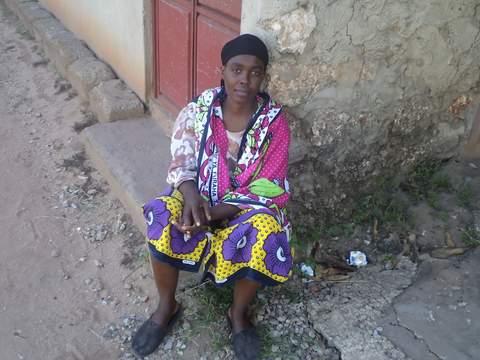
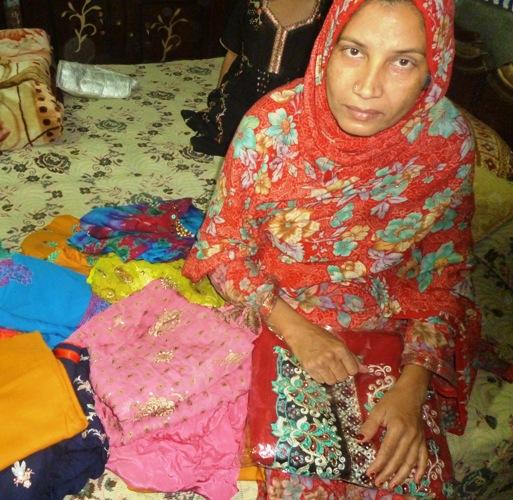
We have just relent money from loans which were repaid, and here are our new microfinance clients. yashar kochachem - may they succeed in their endeavors.
-
$25.00
- Zulfa Likoni, Kenya

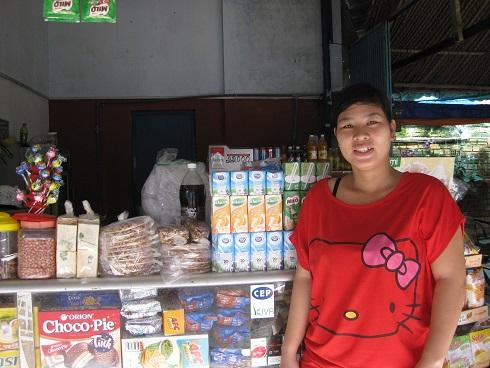
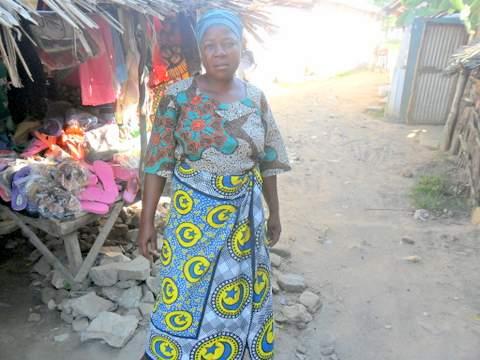
A loan to to purchase stock such as sugar, rice, maize, wheat flour, and cooking fat. $25.00 -
$25.00
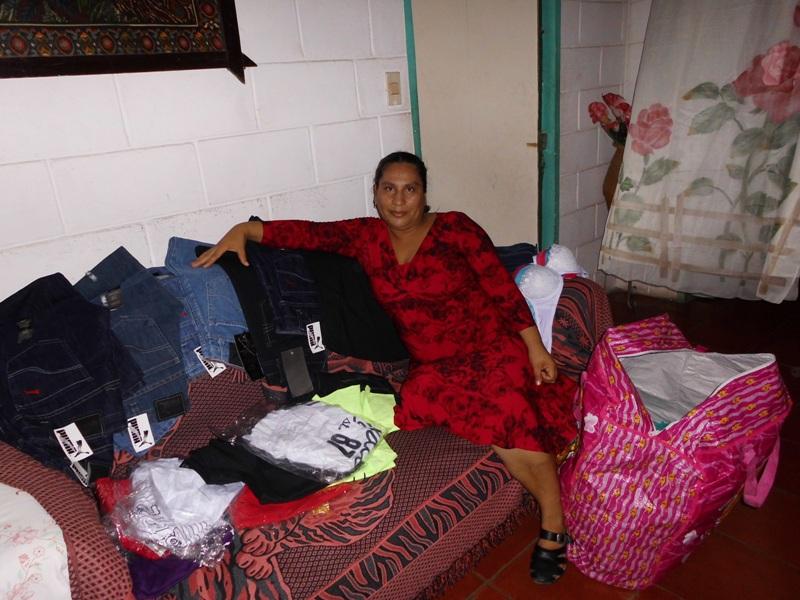
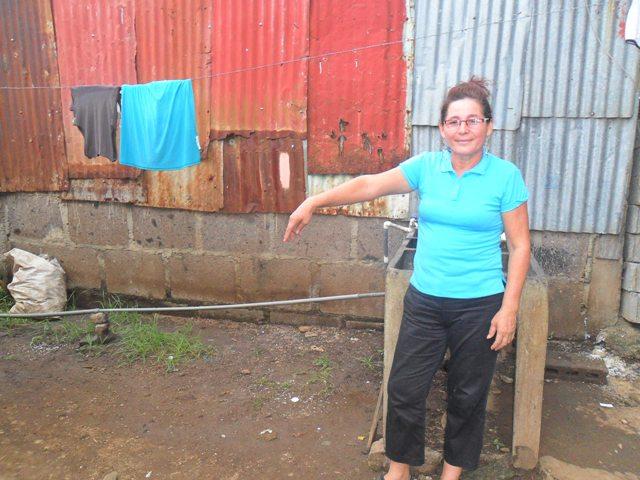
- Rosa Adela Managua, Nicaragua

A loan to to buy cement, sand, iron, bricks, toilets and other plumbing items. $25.00 -
$25.00
-
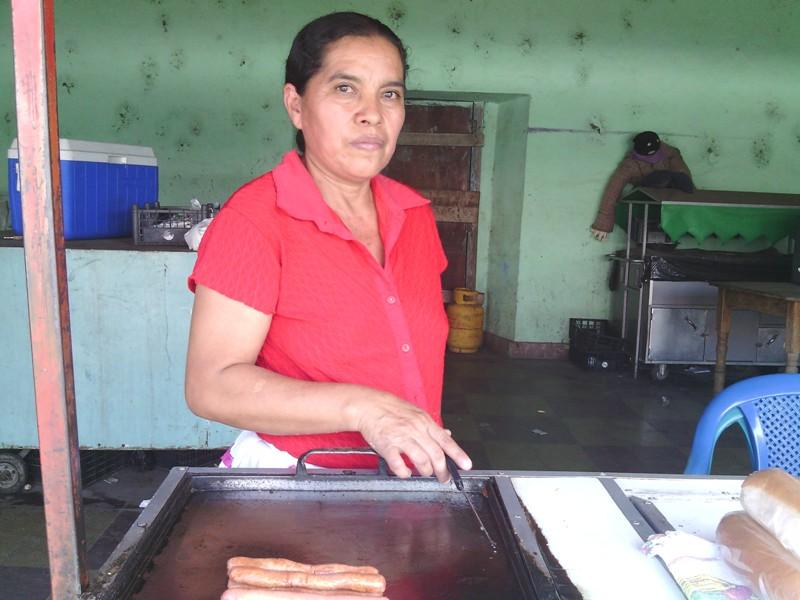
$25.00
- Antonia Moncagua, San Miguel., El Salvador

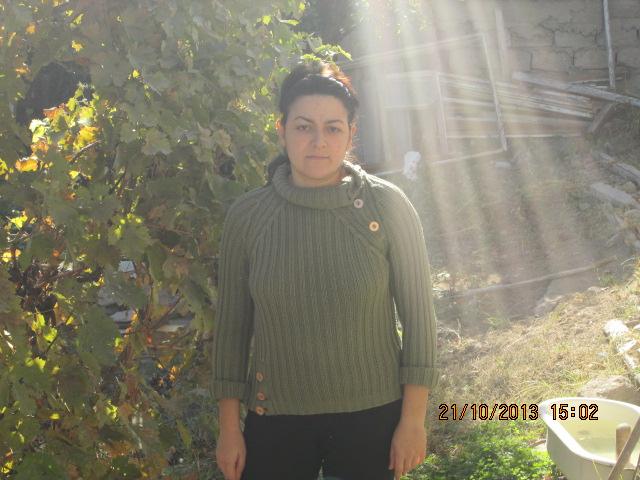
A loan to to buy oil, sausages, bread, bananas, napkins, etc. $25.00 - Kristine Taperavan village, Ararat region, Armenia

A loan to to purchase cable and pipes and pay for the workforce and the water bills to prepare her vineyard for the Autumn. $25.00 -
$50.00
- Arlyn Oroquieta-Dullan, Aloran, Misamis Occidental, Philippines

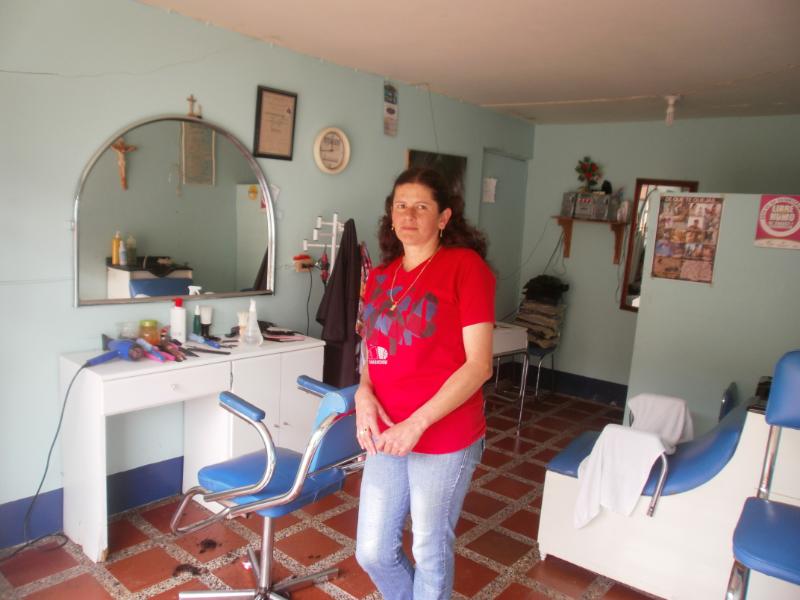
A loan to to buy bags of rice, cases of soft drinks, soap, noodles and other products for sale. $50.00 - Oralia Margarita Pueblo Rico, Colombia

A loan to to buy equipment and supplies for her salon business. $50.00 -
$50.00
Labels:
Kiva loan portfolio,
Social Justice,
Tsedakah
Sunday, October 27, 2013
2013 Stefan Presser Memorial Social Justice Shabbat: Advocating for Common Sense Gun Laws!
Subscribe to:
Posts (Atom)